By Eve Muthoni
Kenya and Uganda have agreed on a new mechanism to finance border infrastructure along the Northern Corridor, the busy multimodal transport network in East Africa.
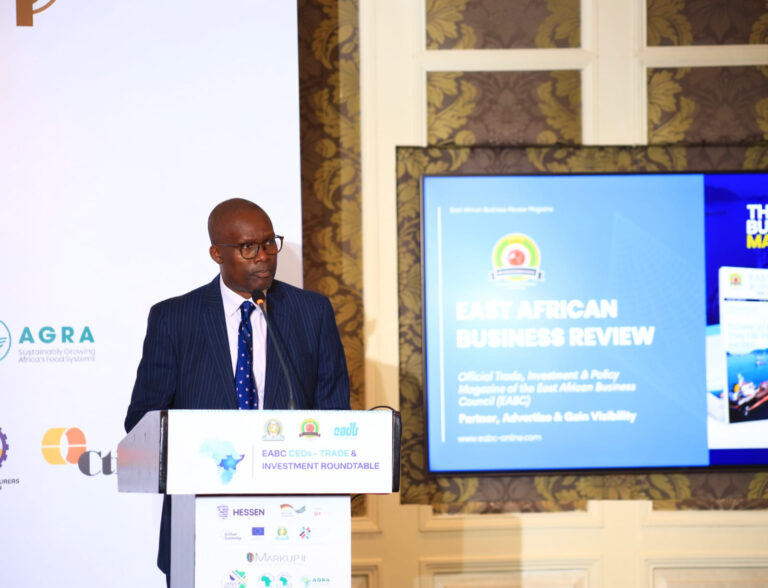
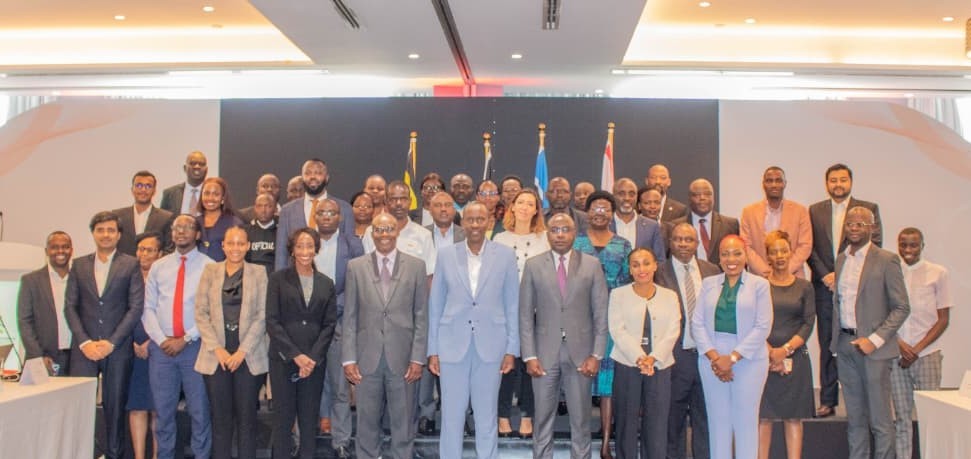
At a meeting convened by TradeMark Africa (TMA), through its subsidiary Trade Catalyst Africa (TCA), and held in Nairobi on March 24, 2026, the Commissioners General of the Kenya Revenue Authority (KRA) and the Uganda Revenue Authority (URA) agreed to advance a new financing model for the network. The move followed the presentation of findings from a pre-feasibility study facilitated by TCA.
The meeting was supported by the European Union (EU) under the Global Gateway Africa–Europe Investment Package. Ms Claudia Boldrini said, “Alternative and sustainable financing mechanisms are now essential,” she said, adding that the EU remains closely engaged as the project advances into its next phase.
The prefeasibility study focuses on improving trade facilitation and optimising the performance of key border posts through the introduction of a cost-recovery model along the corridor. The approach will see the region move to a self-sustaining infrastructure model.
This shift comes at a critical moment. Trade volumes along the Northern Corridor have nearly doubled over the past decade, while infrastructure capacity has remained largely unchanged. Today, Busia, Malaba, and Lwakhakha handle approximately 3,300 trucks per day. Clearance takes three to five hours under normal conditions but rises to 10–15 hours at peak. Logistics costs remain between 30% and 40% of cargo value, while delays at the border alone are estimated to cost operators up to $200m annually.
The proposed cost-recovery model introduces modest, transparent user fees to support infrastructure development, maintenance, and future upgrades. Combined with blended finance, the model is expected to attract private capital without requiring sovereign guarantees.
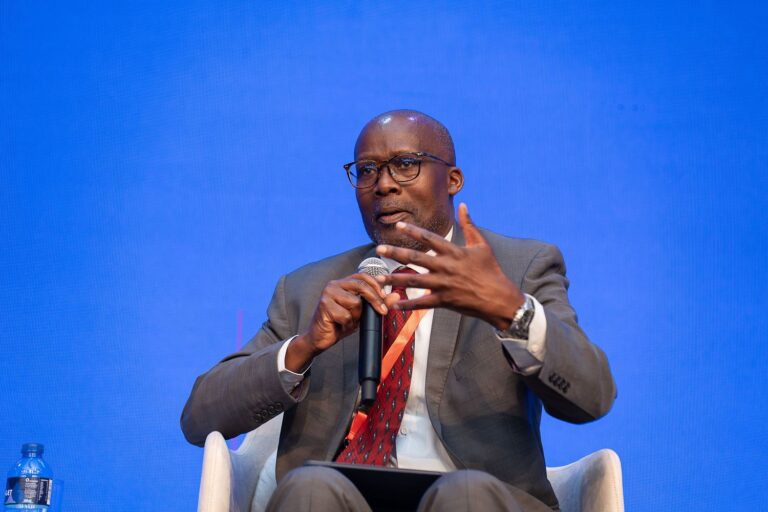
“This is not about profit,” noted the Commissioner General, KRA, Mr Humphrey Wattanga, during the meeting. “It is about ensuring that infrastructure built today can be maintained and improved over time.” The urgency was underscored by his Ugandan counterpart. “We are ready to move forward with the quickest and most efficient solution to address the challenges of long queues, delays, and high costs to businesses,” said John Musinguzi, Commissioner General, URA.
The study adopts a corridor-wide approach, treating Busia, Malaba, and Lwakhakha as an integrated system rather than standalone border posts. This enables redistribution of traffic and more efficient use of capacity.
Key proposals include the development of an express transit facility at Lwakhakha, allowing transit trucks to move through a fast-track, optional paid lane, reducing congestion at Busia and Malaba. In parallel, a Trusted Trade Facilitation Programme (TTFP) will reduce inspection rates for compliant operators over time, easing pressure on existing border infrastructure. Over time, this could halve the number of inspections, freeing up border capacity without requiring endless physical expansion.
Stakeholders also emphasised that improvements at the border must be matched by investments along the corridor. Road infrastructure, digital systems, and coordination across agencies remain critical to overall performance.
The meeting achieved five key outcomes. Kenya and Uganda reaffirmed their commitment to a corridor-wide approach. The preferred technical solutions were validated. Institutional and legal enablers were agreed. A Joint Project Task Force was established to guide the next phase and stakeholders committed to transparent, community-sensitive engagement as the project advances. There was also agreement on a critical sequencing principle: new capacity must be created before existing border posts can be upgraded. Without this, any attempt to improve infrastructure risks paralysing an already strained system.
The project will now move into a full feasibility study to refine technical designs, financial structures, stakeholder engagements, and implementation arrangements.
The initiative is expected to serve as a pilot for a scalable, commercially viable model for border management in Africa.
Other institutions represented at the meeting were the East African Community, the Kenya Highway Authority, the Northern Transit and Transport Coordination Authority, and the Ministry of Works and Transport, Uganda.
Better functioning borders should result in reduced time and lower costs of doing business. The next phase will determine whether the region can translate this model into a system that keeps pace with growing trade demand.