
Making Climate Adaptation Investable
There is a familiar pattern to conversations about climate adaptation in Africa. They often begin with the numbers: the billions of dollars required to help the continent adapt to increasingly frequent droughts, floods, and other climate-related shocks. Before long, the discussion turns to the widening financing gap and the need for greater public and private investment. These are important conversations, but after participating in the Adaptation Investment Summit for Africa (AISA) 2026, I found myself reflecting on whether we have become so focused on the size of the financing gap that we have overlooked an equally important question: what exactly are we asking capital to invest in?
For many years, climate adaptation has been framed primarily as a funding challenge. We have spoken about the cost of protecting communities, strengthening food systems, and building resilience against future climate shocks. While this framing has helped raise awareness, it has also shaped the way adaptation is perceived. Investors rarely make decisions based on urgency alone. They look for opportunities that are commercially viable, where risks are understood, markets function efficiently, and investments can generate sustainable returns. If we want more capital flowing into climate adaptation, then adaptation itself must increasingly be presented as an investment opportunity rather than simply a financing need.
This shift in thinking formed the basis of Trade Catalyst Africa’s contribution to AISA 2026. During the High-Level Plenary on Greening the Financial Ecosystem, our CEO, Duncan Onyango, challenged delegates to reconsider the way we talk about climate adaptation. Rather than asking where adaptation finance will come from, he argued that we should be asking what kinds of opportunities we are creating for capital to invest in. The distinction may appear subtle, but it fundamentally changes the conversation. Capital follows opportunity. It follows markets that function well, projects that are investment-ready, and assets capable of delivering both impact and returns.
Looking through this lens, many of the investments that are often discussed under climate adaptation begin to look very different. A resilient transport corridor is not simply a road designed to withstand climate shocks. It is an economic asset that lowers transport costs, connects producers to markets and strengthens regional trade. A climate-smart warehouse does more than protect agricultural produce; it reduces losses, improves productivity, and increases the value of agricultural supply chains. Digital trade platforms, cold chains and irrigation systems all contribute to resilience, but they also generate commercial value. These investments protect communities from climate risks while supporting businesses, creating jobs and strengthening markets.
One of the most thought-provoking discussions at the Summit centred on trade itself. We rarely describe trade as a climate adaptation strategy, yet perhaps we should. When farmers can access regional markets despite local climate shocks, they are better able to sustain their incomes. When efficient border systems reduce delays that would otherwise spoil perishable goods, they strengthen food security. When transport corridors remain operational during periods of disruption, businesses continue trading and communities continue accessing essential goods. In each of these examples, trade is not simply moving goods and services; it is helping people and economies adapt to a changing climate.
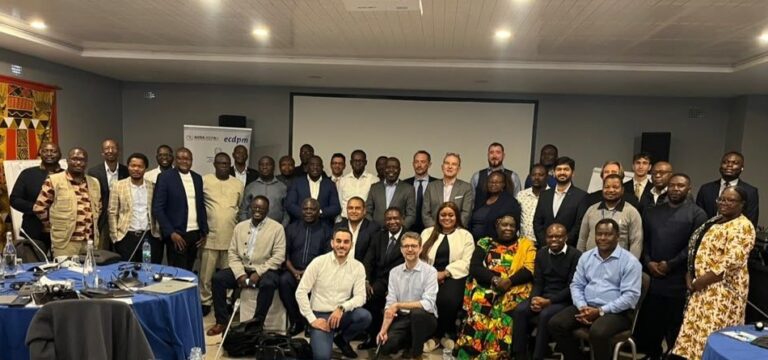
These ideas carried into the breakout session convened by Trade Catalyst Africa and TradeMark Africa on Investing, Trade and Innovation: Financing Climate-Resilient Agri-Food Corridors in Africa. The discussion brought together voices from continental policy institutions, commercial banking, infrastructure, technology, agricultural development and county government. Although each participant approached the conversation from a different perspective, they reached a remarkably similar conclusion. Climate-resilient trade corridors cannot be delivered through infrastructure alone. Roads and border posts may provide the physical backbone, but they must be complemented by finance that enables businesses to grow, technology that improves efficiency, policies that reduce barriers to trade and institutions that create confidence for investors. It is only when these different components work together that markets become more competitive, businesses become more resilient, and investment can flow with confidence.
This is, ultimately, the principle that underpins Trade Catalyst Africa’s work. Our role is not simply to finance infrastructure or increase access to trade finance for small and medium-sized enterprises (SMEs) in isolation. It is to help build functioning markets where infrastructure, finance, technology, and policy reinforce one another, creating commercially viable opportunities capable of attracting both public and private investment. Whether supporting trade infrastructure, improving access to finance for SMEs or structuring investment opportunities along regional trade corridors, our objective remains the same: to make trade more investable.
The conversations at AISA reinforced that this approach is just as relevant for climate adaptation as it is for trade. Africa will undoubtedly continue to require significant public investment, development finance and philanthropic support to respond to climate change. However, if adaptation is to move beyond pilot projects and achieve the scale the continent requires, we must devote as much attention to building investment-ready markets as we do to discussing financing gaps. Because, ultimately, capital does not flow simply towards need. It flows towards opportunity.
Authored by Eve Muthoni