By Eve Muthoni
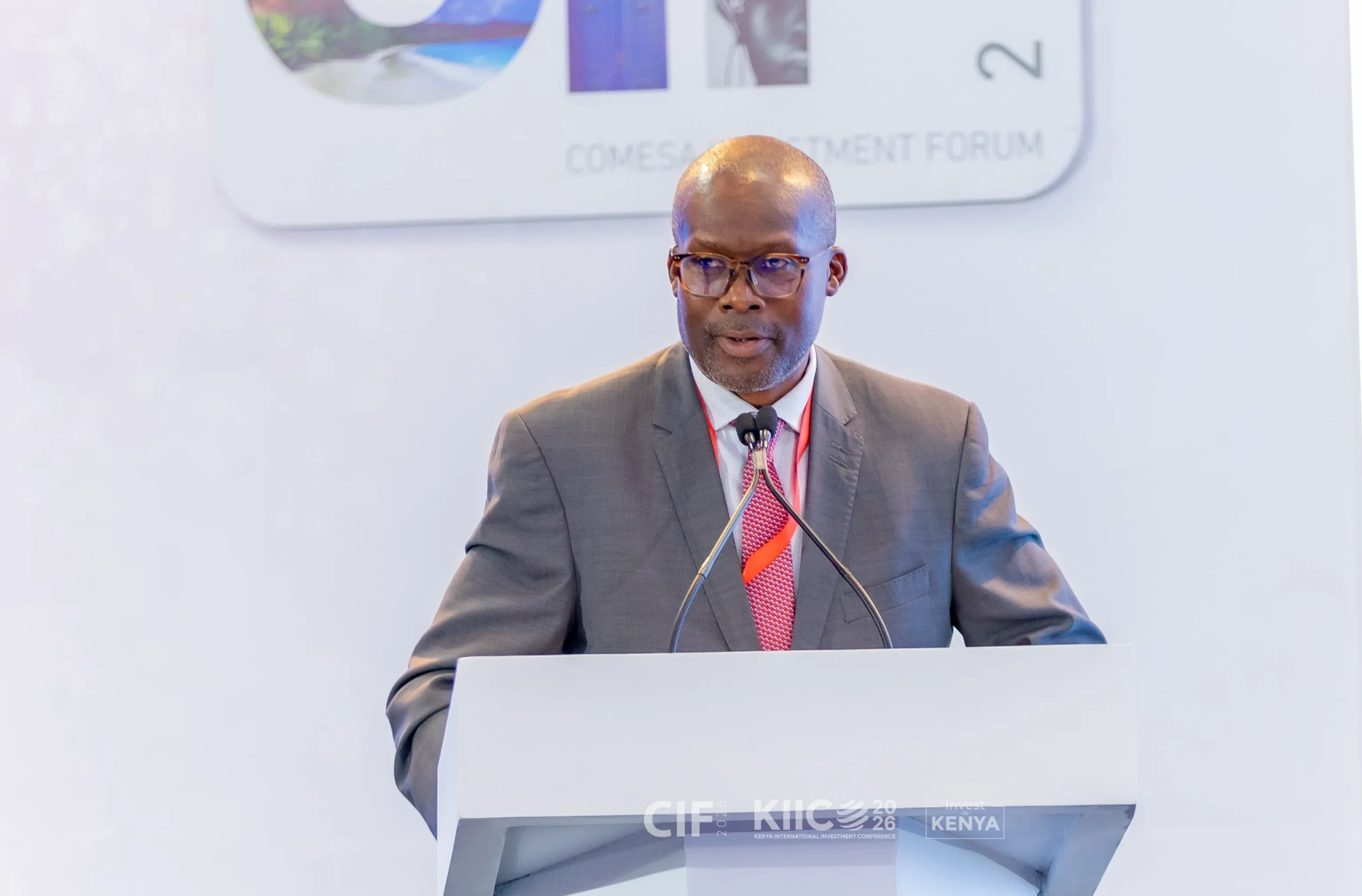
Trade Catalyst Africa’s CEO, Duncan Onyango, addressed delegates at the COMESA Investment Forum 2026, held on the sidelines of the Kenya International Investment Conference in Nairobi, closing a high-level plenary on attracting foreign direct investment into regional value chains.
For the past two decades, trade facilitation has focused on removing non-tariff barriers, addressing regulatory hurdles, and improving policy coordination. But the conversation is shifting. The question now is not just how to make trade more seamless, but how to make it bankable.
Capital does not flow where risk is high and returns are uncertain. In this context, regional value chains do not fail for lack of demand, they fail due to costs, delays, and fragmentation. This friction is felt most acutely along trade corridors: across roads, ports, borders, and inland logistics systems that often operate in isolation.
Duncan underscored the need to move away from this fragmented approach and instead view trade corridors as integrated, end-to-end systems. Because if the corridor is inefficient, manufacturing cannot compete, no matter how efficient the factory or how strong the business.
He pointed to borders as the most immediate opportunity for reform. Across Africa, inefficiencies at borders continue to drive up the cost of trade due to delays, duplication, and poor coordination among agencies. Making borders faster, more predictable, and better coordinated is one of the quickest wins available.
Reliable and affordable energy is equally essential. Manufacturing depends on consistent, competitively priced power. Without it, production costs rise, exports become uncompetitive, and value addition cannot scale.
To move forward, Duncan highlighted three priorities:
• Integrated trade corridors that function as a single system,
• Coordinated and efficient border infrastructure, and
• Reliable and affordable energy for industry.
These foundations are critical to ensuring that trade infrastructure is not only functional but commercially viable. Models such as cost recovery and blended finance can then be used to structure investable opportunities and attract private capital at scale.
At Trade Catalyst Africa, this thinking is already being put into practice. The organisation is working with governments and border communities to develop a portfolio of investable border infrastructure, solutions designed not just to improve efficiency, but to be commercially viable and attractive to investors.