
About Us

Trade Catalyst Africa (TCA) is a catalytic financing facility wholly owned by TradeMark Africa (TMA); that aims to address the challenge of access to finance for trade infrastructure and trade finance.

TCA will address this through blended finance to de-risk commercial investments in trade projects. It will specifically focus on investments in trade infrastructure, both hard and soft infrastructure, and providing better access to trade finance for SMEs.

USAID has provided the initial capital of $25 Million to operationalise TCA. TCA will leverage this funding to raise additional capital from development finance institutions (DFIs), commercial banks, private equity funds, microfinance institutions, FinTechs and other financial institutions for investment.

Ultimately, TCA will be an evergreen fund and will revolve its funding across multiple projects by recouping its investments using a transparent revenue model.

Mission & Vision
Our Mission

To elevate Africa's exports by amplifying trade finance and infrastructure investment.

Our Vision
To catalyse African Trade for Prosperity.
TCA Focus Areas
TCA Trade Prosperity Facility

TCA is unlocking investments for trade infrastructure and finance for SMEs in Africa. Our trade prosperity facility has two financing windows and a project preparation component:

How We Evaluate Investments

Relevance

High potential of enabling export and intra-regional trade.

Sustainability

Meets environmental, social, and governance guidelines.

Predictability

Transparency provided from early stages of engagement.

Impact

Clear impact on economic growth, diversity, and inclusion.

Ethical Approach

Build consensus of all project stakeholders.

Commercially Viable

Demonstrable value for money.

Investment Criteria
Our Team

The Board

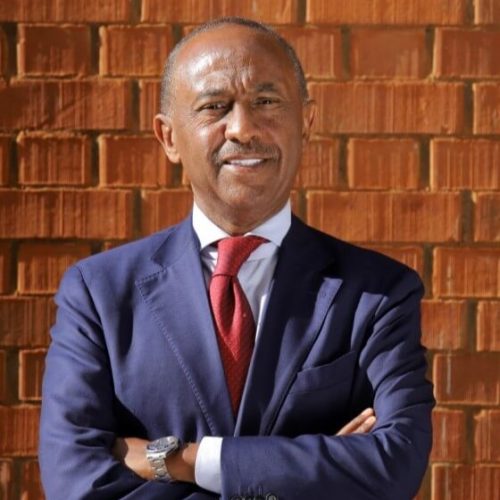
Patrick Obath
Board Chairman, TCA

Patrick Obath

Gabriel Negatu
Board Member

Gabriel Negatu

Patricia Ojangole
Board Member

Patricia Ojangóle

Board Chairman, TCA

Patrick Obath

Patrick Obath is the managing consultant of Eduardo and Associates. He previously served as Managing Director and Country Chairman for Kenya Shell and Shell Tanzania. He also serves as board chairman for PZ Cussons East Africa Limited, KCA University, Board of Trustees, Kenya Cultural Centre, Starehe Boys Centre and Board of Trustees, LVCT Health. He also serves as a board member of Kenya Private Sector Alliance (KEPSA), Afren Plc, Standard Chartered Bank – Kenya Ltd, Wananchi Group Holdings Ltd, New Forests Company Holdings Limited and Unga Group Holdings Limited.

Board Member

Gabriel Negatu

Mr Gabriel Negatu is the former Director General at the Africa Development Bank (AfDB). He has more than 25 years of senior level program, operations and managerial experience, including 18 years at AfDB. He has extensive experience in operations having been senior and principal programme officer from 1998 to 2002, chief programme officer from 2002 to 2006 and sector director for economic and financial governance, where he headed the bank’s first governance department. Mr. Negatu was credited for successfully leading the bank’s response to the global financial crisis and for spearheading the use of budget support operations for fragile states.

Mr Negatu holds a bachelor’s degree in Geography and Planning from California State University and a Master’s Degree in Public and International Administration with a focus on Economics and Social Development from the university of Pittsburgh.

Board Member

Patricia Ojangóle

Patricia is a professional accountant with 17 years’ experience in Banking and Finance. Currently, she is the Managing Director of Uganda Development Bank Limited she has been instrumental in turning around the Bank to become the preferred and trusted partner to the Government of Uganda in achieving Socio-economic development aspirations.

Prior to becoming the Managing Director, she worked as a Chief Audit Executive at Uganda Development Bank and a Senior Internal Audit Manager at Standard Bank Group. She has specific competences in Strategy development and implementation, Risk management, Corporate Governance and Finance

Patricia holds a first-class Master of Philosophy in Development Finance from the University of Stellenbosch, South Africa. She also holds an Executive Master’s Degree in Business Administration from Eastern and Southern Africa Management Institute, Arusha, Tanzania; a Bachelor of Commerce (Hons) Degree from Makerere University, Uganda and has completed several leadership and management programs. She is currently undertaking her PhD studies in development finance at the University of Stellenbosch.

Patricia is a Fellow of the Association of the Certified Chartered Accountants (UK); the Certified Public Accountants of Uganda (ICPAU), as well as The Institute of Internal Auditors Uganda (IIA).

She is a member of the Board of Uganda Development Bank Ltd, Busitema University Fund Ltd, and The New Vision Group. She is also a member of the Management Board of the European Union Funded START facility and serves on the boards of the Association of Development Finance Institutions in Africa and in the Association of member countries of Islamic Development Bank.

CEO

Duncan Onyango
Chief Executive Officer, TCA

Duncan Onyango

Chief Executive Officer, TCA

Duncan Onyango

Duncan, an Oxford-educated investment executive with over two decades of management experience, assumed his role on 3 July 2023. He joins TCA from Pharo Ventures East Africa, a for-profit arm of The Pharo Foundation focused on investing in commercially viable and environmentally sustainable enterprises in Eastern Africa. Duncan brings an abundance of skills to his new role from his vast experience gained from working in the donor, development finance, private and public sector environments, having equally served on the boards of diverse organisations globally.

Our Latest News
Blog Posts

Tog Wajaale Border Infrastructure Upgrade Catalyst for Berbera-Addis Transit Corridor Trade

Actors in Ethiopia’s logistics value chain upskilled on free trade zones operations

Our Partners

USAID has provided the initial capital of $25 Million to operationalise TCA.

TCA will leverage this funding to raise additional capital from development finance institutions (DFIs), commercial banks, private equity funds, microfinance institutions, FinTechs and other financial institutions for investment. Ultimately, TCA will be an evergreen fund and will revolve its funding across multiple projects by recouping its investments using a transparent revenue model.

USAID
TradeMark Africa
EN_co_fundedvertical_RGB_Monochrome

CONTACT
US

Project Preparation

Turns concepts into viable investment-ready projects through technical assistance, expert advice, planning, funding feasibility studies, and first-loss equity during the risky development stages.

Trade Finance Window

TCA provides subordinated debt to trade finance vehicles for on-lending to MSMEs in sectors with high export potential, such as agro-processing, horticulture, cotton, textiles, and garments, with a particular focus on youth- and women-owned enterprises. We boost these enterprises’ capacity to engage in export-value chains, promoting economic growth and inclusivity. 

TCA partners with financial institutions, including commercial banks, fintechs, DFIs, and non-banking financial institutions like SACCOs

Diverse partnerships will deliver broad reach and effective delivery of competitive financial products. 

For investors, the Trade Finance Window offers a chance to be part of a transformative initiative that promises to reshape trade dynamics in emerging markets, ensuring robust returns and lasting social impact.

Project Development Finance Window

TCA deploys concessional and catalytic capital to support and de-risk the development of physical and digital infrastructure. 

We act as a proactive project sponsor, initiating and conceptualising specific trade-focused projects. This includes identifying credible partners and co-creating projects, ensuring that the initial groundwork aligns with national trade goals to secure political buy-in. 

We then utilise financial mechanisms, such as subordinate loans, convertible loans, or equity, to attract a mix of commercial and developmental capital, thereby mitigating risks associated with early-stage investments.

TCA’s technical assistance can be deployed towards various interventions, from feasibility assessments and project preparation and structuring to implementation, ensuring projects are efficiently executed. 

As an investment manager, TCA then collaborates with investors to prepare projects for subsequent investment phases, including detailed oversight and monitoring success against initial objectives.