
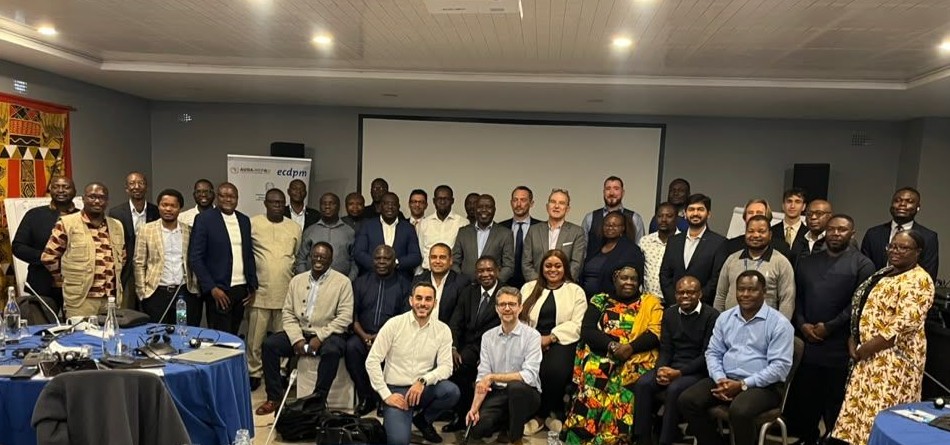
Last week, Trade Catalyst Africa joined stakeholders in Lusaka, Zambia, for a dialogue convened by the European Centre for Development Policy Management (ECDPM) and the African Union Development Agency (AUDA-NEPAD) on financing sustainable agri-food systems along Africa’s strategic trade corridors.
The discussion brought together development finance institutions, commercial banks, investors, governments, development partners, corridor authorities, and private sector actors working along the Lobito, Northern, and Abidjan–Lagos Corridors.
One message emerged clearly from the discussions: the challenge is not a lack of capital, but a lack of investable opportunities and effective delivery mechanisms. While significant financing is available, few projects are investment-ready, and the market systems needed to connect available financing to businesses, farmers, and communities on the ground are underdeveloped.
This challenge is particularly evident along the Lobito Corridor, where substantial resources have already been committed to infrastructure and agricultural development. Yet stakeholders acknowledged that financing alone cannot transform food systems. Investments should be accompanied by project preparation, technical assistance, strengthened supply chains, and support for market actors if capital is to translate into meaningful and lasting economic impact.
The conversations highlighted the need for:
– Trade-enabling infrastructure, including warehousing, cold chain, aggregation, and logistics facilities;
– Technical assistance and market systems support that strengthen farmer-to-market linkages;
– Catalytic capital that bridges the gap between grants and commercial investment; and
– Financing vehicles that help SMEs grow and become investment-ready.
For TCA, the dialogue reinforced the importance of combining finance with practical implementation support. Sustainable trade and agricultural transformation require capital deployment and coordinated partnerships that can build investable pipelines, reduce risk, and crowd in private investment.
We were encouraged by the strong interest from governments, corridor authorities, development finance institutions, and private sector partners to continue these conversations.
As Africa invests in strategic trade corridors, the opportunity is not simply to move goods faster. It is to build competitive agricultural systems, strengthen regional value chains, and create pathways for businesses and communities to participate in and benefit from trade-led growth.